
 Delivery
Available clones can take up to 14 days to be ready & rooted for delivery
 Quality Control
Regular Checks in specialised laboratories to provide healthy plants in best quality
Our Privacy Policy explains our principles when it comes to the collection, processing, and storage of your information. This policy specifically explains how we employ cookies, as well as the options you have to control them.
Cookies are small pieces of data, stored in text files that are stored on your computer or other device when websites are loaded in a browser. They are widely used to "remember" you and your preferences, either for a single visit or for multiple repeat visits
We use cookies for a number of different purposes. Some cookies are necessary for technical reasons; some enable a personalized experience for both visitors and registered users; and some allow the display of advertising from selected third party networks.
Visitors may wish to restrict the use of cookies or completely prevent them from being set. If you disable cookies, please be aware that some of the features of our service may not function correctly
We only collect information about you if we have a reason to do so-for example, to provide our services, to communicate with you, or to make our services better.
You can find the detailed information in our extended privacy policy.
We are committed to maintaining the trust and confidence of our website visitors. We do not collect, sell, rent or trade email lists or any data with other companies and businesses. Have a look at our Privacy Policy page to read detail information on when and why we collect your personal information, how we use it, the limited conditions under which we may disclose it to others and how we keep it secure.
We may change Cookies and Privacy policy from time to time. This policy is effective from 1st jan uary 2025.
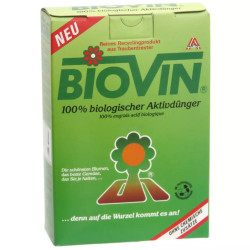
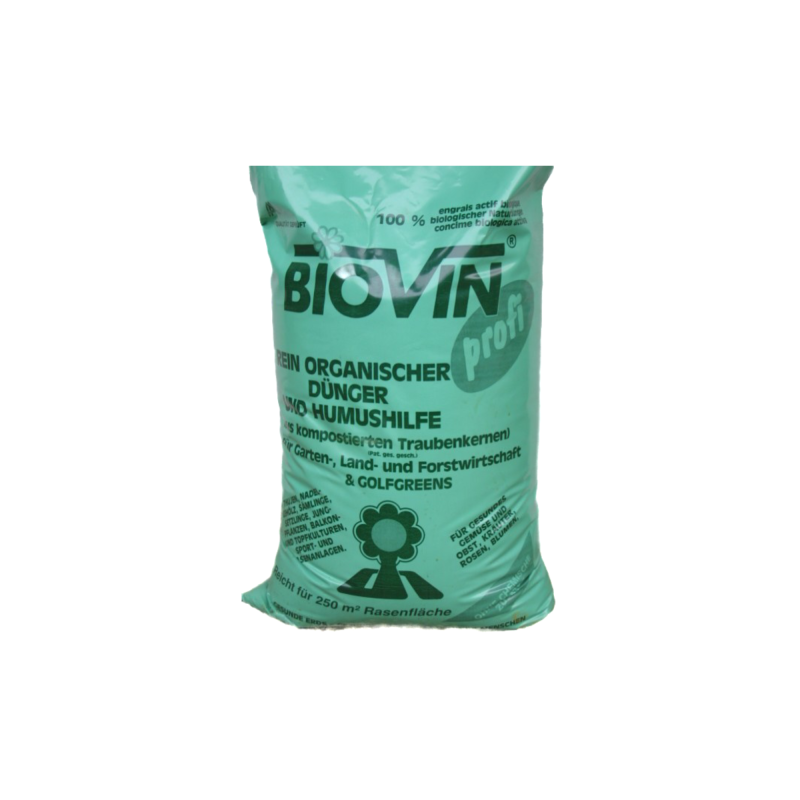
The process of “Regulated Grape Mark Composting” allows the humification of grape mark which is available in large quantities as a by-product of grape-juice-making. The fermentation process is started by inoculation and regulated by temperature and air flow in a solid sate fermentor and ensures a succession of microorganism (Streichsbier et al., 1982*) starting with yeasts which, by autolysis and subsequent binding of the residual alcohol by esterifying reactions, enable rapid appearance of a mixed population of bacteria. The temperature increase continued by this bacterial flora favours growth of a thermophilic fungal flora (dominated by Thermomyces sp.) which is mainly responsible for the decomposition process. In the last phase a mixed population of Streptomycetes and other Actinomycetes is taking over and is finalizing humification with an additional production of plant growth hormones (see analysis) The fermented product is dried and granulated and can be stored for several years without losing quality.